Field Note 4.3—The Authority That Must Not be Named
“What is rejected by the ego returns in disguised form.”
—Anna Freud
What follows listens closely to a White House press conference, one year into the administration, January 2026.
By the time a word bubbles up to the surface, it’s passed through several subterranean chambers. It arrives as a dream-image arrives—attached to innumerable associations—tangled with roots, not etymological, yet of a perdurable toughness.
In our waking hours, we are more able to observe our speech, and to correct it, should we need to. But as a man sundowns, and shadows grow longer, more slips through—undetected—into the open, lost in the dimming contrasts.
Some in that dimming evening do not so much fade away, as become more darkly what they’ve always been.
Among the deepening shadows lies his own, which he mistakes as another. And in tracing these, in this lazing evening, his mind, loosening, confesses far more than he intends.
He thinks he’s clever—brilliant, even—doing “the weave,” discovering rhetorical riches, inner riches, spinning his story freely now, unbound by the teleprompter, carried along by his own associations.
So we sit back and listen, and search between the lines, the syntactic cracks—listening for what the words bring with them from the underworld.
The unconscious is structured like a language.
—Lacan
Exactly one year into the administration, he leans into the White House microphone, tells of criminals, cashless bail, and calls the prior administration’s policy a “disaster.” Murderers, he says, “they just let them out.”1
Meanwhile, federal immigration forces surge into the streets of Minneapolis. A mother of three has been shot and killed.
His prose unspools, and he boasts of having “signed an executive order to bring back mental institutions and insane asylums,” clearing the way to conjure the familiar form of the madman-at-the-gate—the barbarian—an archetypal figure through which he has so often eroticized the narrative.
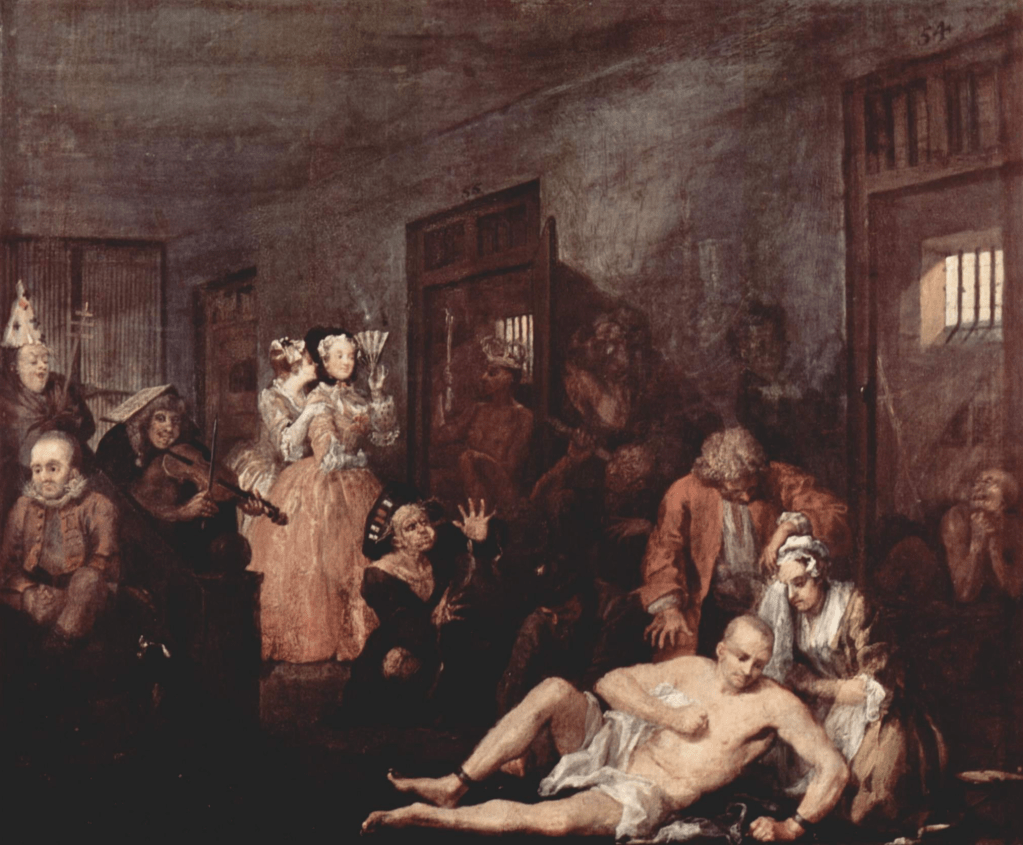
“We’re going to have to bring the asylums back,” he muses. “Hate to build those suckers, but you got to get the people off the streets.”
Meanwhile, feeds fill with videos of agents pulling brown bodies from cars and homes, clashing with protestors. A young man is shot in the eye, leaving him permanently blinded.
His gaze turns inward—to Queens, to Creedmoor, to the all-American baseball field of his childhood, the garden of his innocence—and before his mind’s eye appears the image of his mother.
“Creedmoor,” he says of the psychiatric building, “It was a big—” he interrupts himself, turning his inner eye upward to ask, “Mom, why are those bars on the building?”
Meanwhile, the residents of Minneapolis learn that the five-year-old son of an asylum-seeker has been taken into custody by federal agents.
“I used to play Little League baseball there, at a place called Cunningham Park,” he tells reporters. “I was quite the baseball player, you wouldn’t believe.”
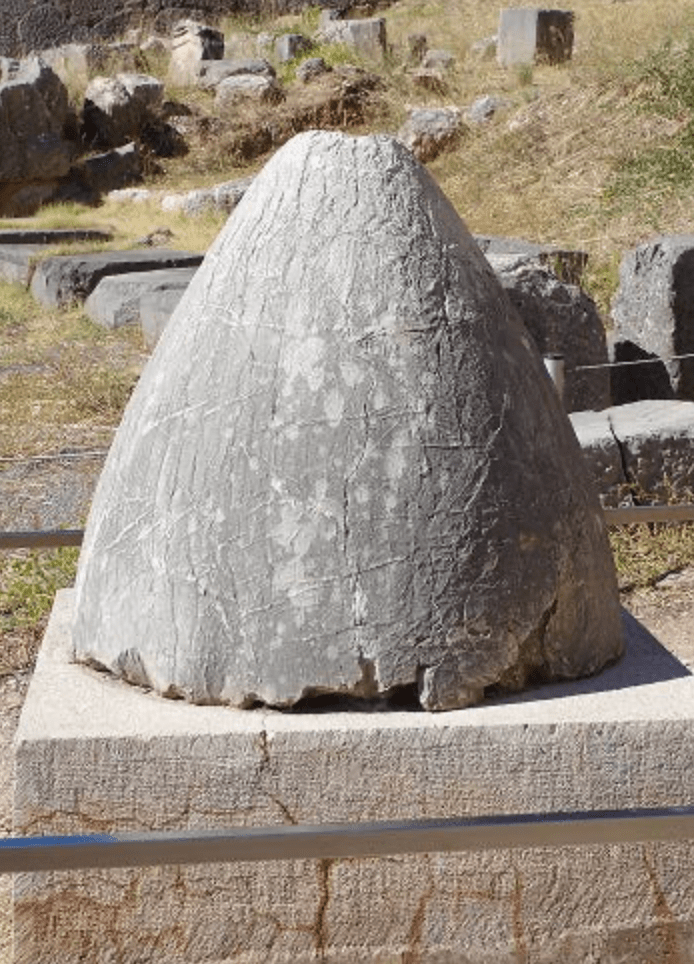
And then we feel the weight, as he sets down his Omphalos stone and projects the scene for us:
“I said to my mother, ‘Mom,’ she would be there—always there for me.” His eyes drop.
We recall what his niece—a clinical psychologist—has written about his childhood: that his mother suffered severe complications after the birth of his younger brother, was hospitalized, and underwent major surgery. She was largely absent from the household during a critical period of emotional attunement, regulation, and attachment. Her absence was filled by a harsher paternal authority.
“Son, you could be a professional baseball player.”
“Thanks, Mom.”
This moment of reflection—an idealized self basking in the warmth of maternal intimacy—shifts again. His mind’s eye turns outward, to an imposing force. A masculine force.
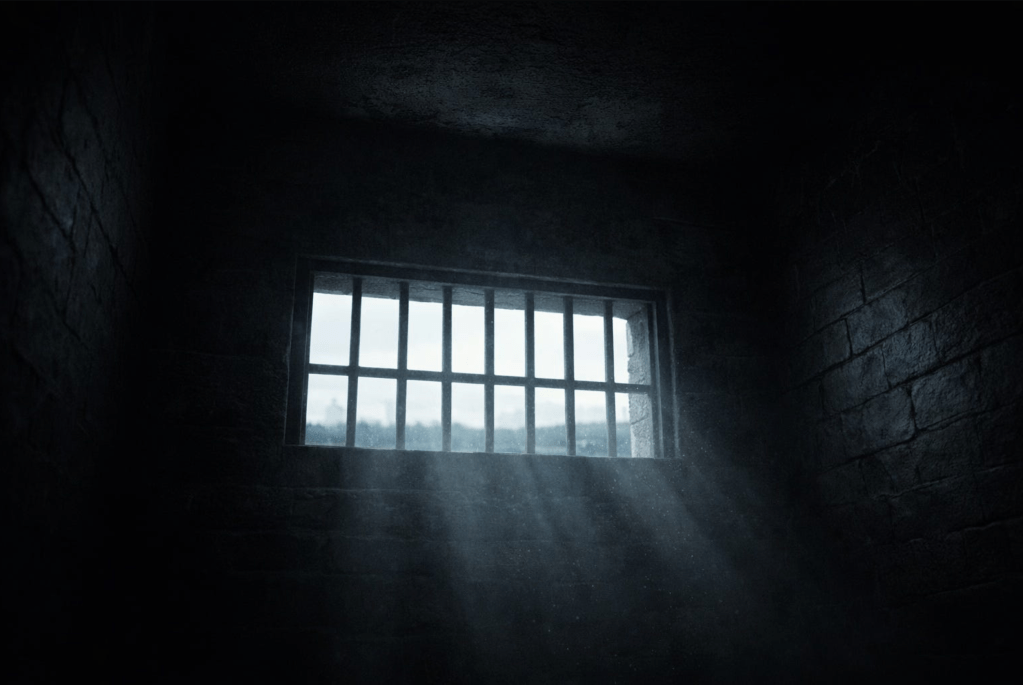
“Why are those bars on the windows?” he asks her, looking up over his left shoulder.
“Big building,” he says, lifting his right hand, then dropping it. “Big, powerful building. It loomed over the park, actually.”
She says, “Well, people that are very sick are in that building.”
He nods.
Meanwhile, the architecture of confinement is being quietly expanded—stone by stone, brick by brick, contract by contract—making detention a permanent feature of the American landscape.
“I said, ‘boy.’ I used to always look at that building, and I’d see this big building, big, tall building.”
Now, he shakes his head and shrugs his shoulders: “It loomed over the park. It was sort of—now that I think of it, it was a pretty unfriendly sight.”
“Boy. It wasn’t normal. You know, you’re used to looking at a window. But this one—steel. Vicious steel. Tiny windows. Bars all over the place.
“Nobody was getting out.”
🧊 Want to read “Of ICE and Men”? Click here.
 No Shortcuts to Now
Leave a comment