Waypoint 4.3—A Story of Flow Made Stone
“All animals are equal, but some animals are more equal than others.”
— Orwell, Animal Farm
“My own morality. My own mind.
It’s the only thing that can stop me.”— Donald Trump, January 2026
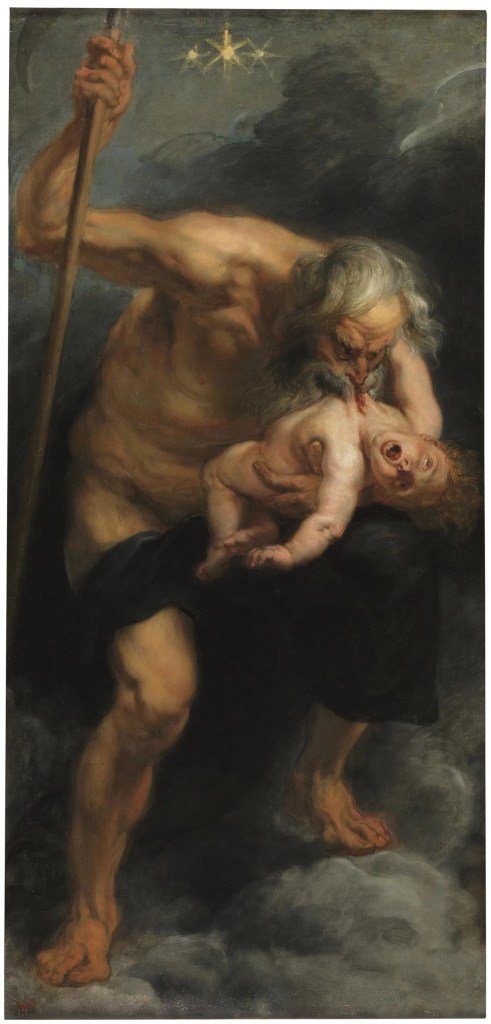
Cronus swallowed his children.
The prophecy had foretold that, just as he had overthrown his own father, Uranus, so one of his own children would overthrow him.
This foreknowledge tormented him. Transformed him.
When Cronus was yet young—and his blood warmer—his mother, Gaia, had tired of his father’s anxious oppression. She had tired of taking her children back into herself. She could no longer act against nature.
So she created a jagged flint-sickle, and took her boy aside. She instructed him what to do. And this he did: with that same sickle, he castrated his own father, then tossed his gonads into the deep-blue maternal sea.
Ka-plump.
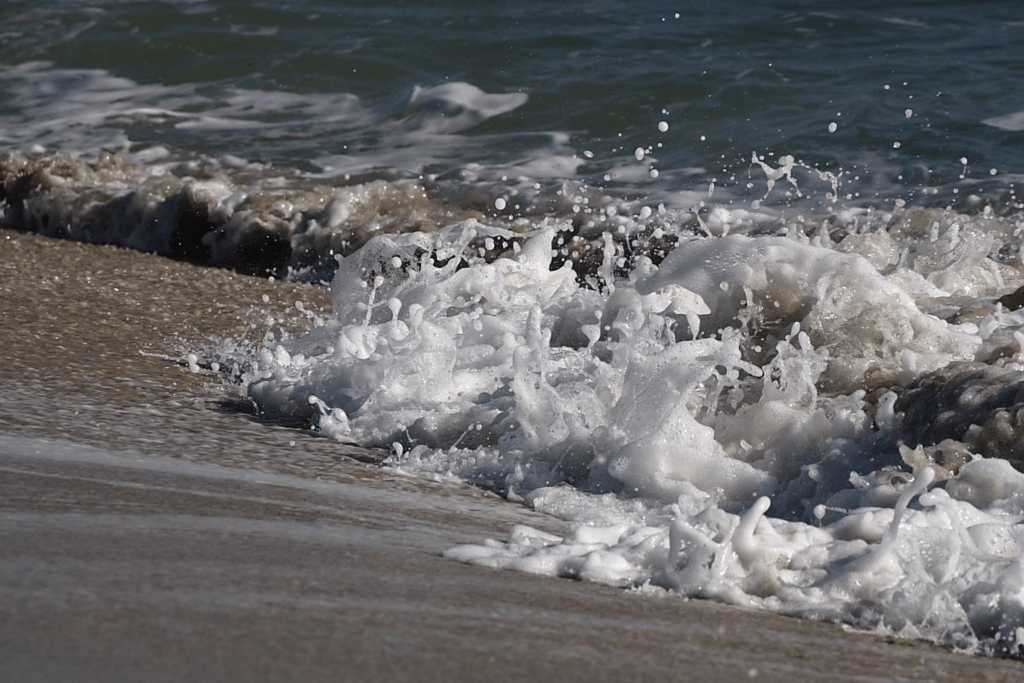
Now the waves churned and mixed blood, salt, and semen. From this fertile froth emerged Aphrodite, whose name means “foam-born.”
Having overthrown his father, Cronus took his elder sister to be his wife, his cosmological consort.
Ancient etymologists link her name—Rhea—to the Greek verb meaning “flow.”1
Through this goddess flow motherhood, milk, generations, and time.
Now, the same anxiety that consumed Uranus consumes Cronus. The liberator turns tyrant.
And like her mother before her, Rhea can no longer act against nature. She cannot allow Cronus to swallow another of her children. He’s already devoured a generation: Demeter, Hestia, Hera, Hades, and Poseidon.
So she turns to Gaia, her mother, the mother of mothers, for help. With Gaia’s guidance, she gives birth to Zeus, covertly, and hides the infant in a cave on Crete.
Gaia tells Rhea to wrap a surrogate stone in swaddling clothes, and present it to her husband. Cronus gulps it down whole. The stone sinks to the pit of his stomach, and settles with Zeus’s five siblings.
He smiles, scratches his belly, and belches, feeling safe and secure.
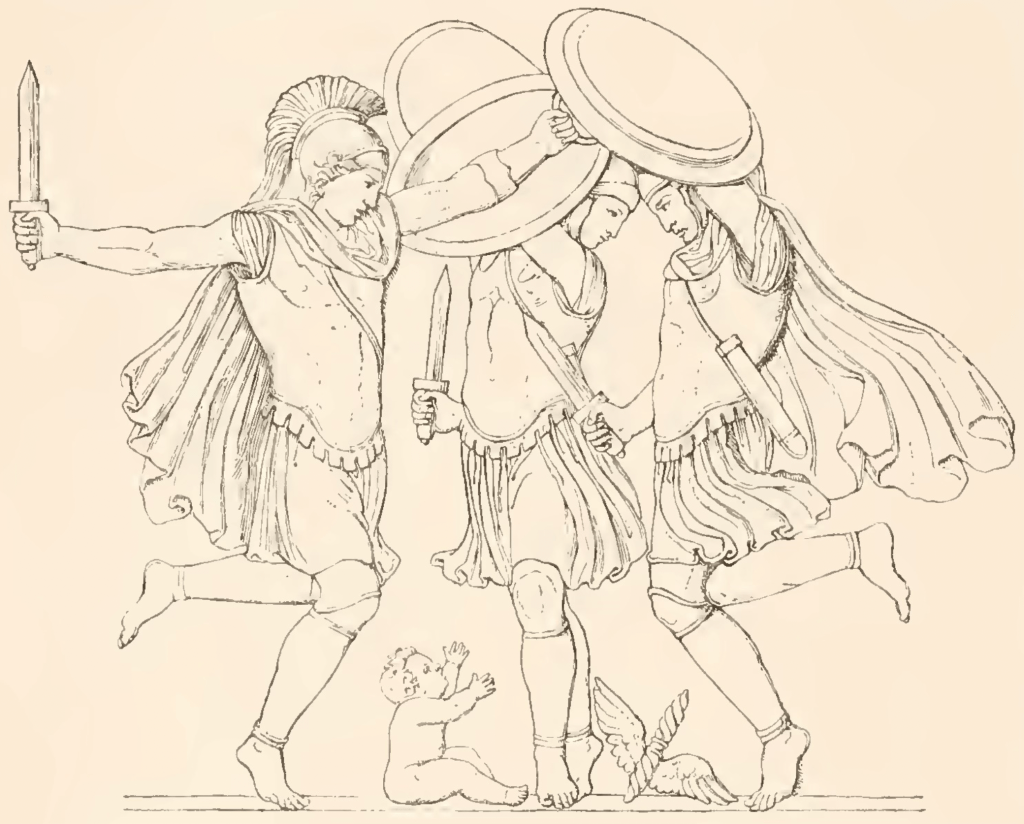
Meanwhile, hidden in his cave—a quickening god of a new generation, forced into the womb of the earth—Zeus cries for his mother. To mask the sound, the Curetes coordinate. They clash their bronze shields and spears in a rhythmic, warlike dance, raising a thunderous din.
While Rhea is away, Amalthea, the goat-nymph, feeds the child milk and honey. She gives him the horn of plenty—the cornucopia—as the god grows strong in secret.
And soon enough, with a draught Gaia taught him to prepare, Zeus forces his father, Cronus, to disgorge the stone he mistook for his son—and then, each of his undigested children.
Freed at last, they divide the world between them, and rule it from Mount Olympus.
Now broad of chest, tall as a tree, and seeking the center of his world, Zeus releases two eagles simultaneously—one from each end of the earth. Their paths intersect in Greece, at Mount Parnassus, and there Zeus sets the surrogate stone.
This marks the world-navel: the omphalos, the center of all, where flow ends.
🎧 Prefer to listen to this piece? Click here.
🟰 Want to read “An Ontology of Equality”? Click here.
 No Shortcuts to Now
Leave a comment