
A Story of Origins and the Oceans We Never Left
“Let this first be established: that I am a part of the whole that is governed by nature; next, that I stand in some intimate connection with other kindred parts.” — Marcus Aurelius
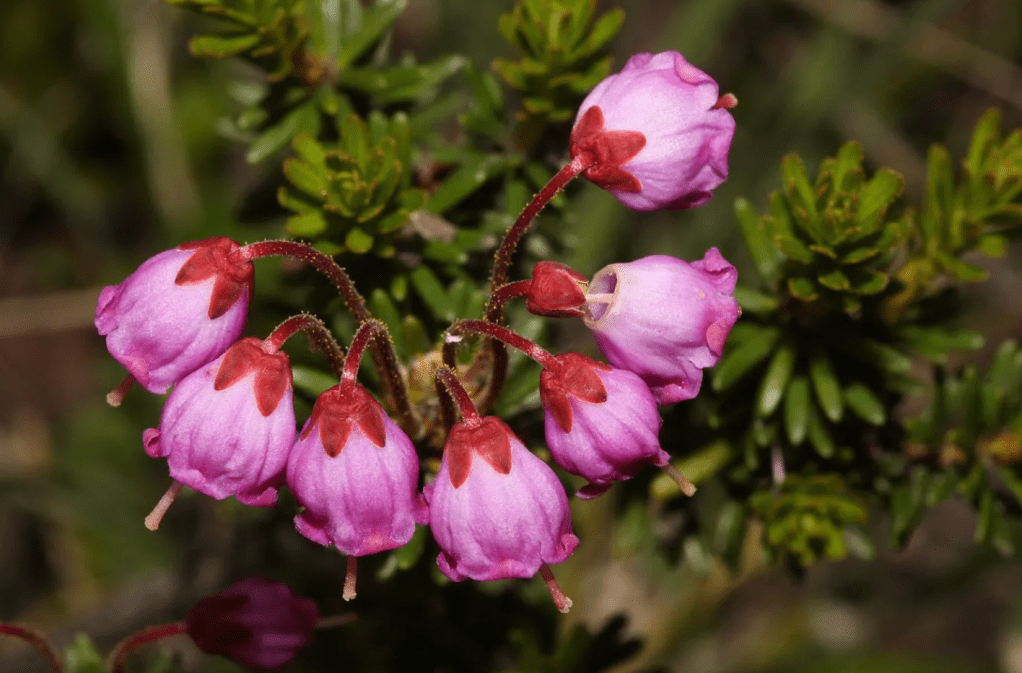
The Brewer’s Mountain Heather—this same, untamed purple heather that freckles Lassen’s ashen slopes—thrives in high alpine meadows, where she sips the ever-melting snows carried in on the long, swirling rivers of the far-western sky.
This little heather belongs to the genus Phyllodoce, named for a water nymph, one of the fifty daughters of Doris, the mythic Oceanid.
Doris is a sea-goddess, a second-generation Titan who lived long before Zeus established his Olympian hierarchy. She’s no queen, but rather a natural node within a mythic network. She’s but a single, dew-bright strand within an interconnected web of life. She’s also the daughter of Oceanus, the world-circling river, and of Tethys, the fertile sea. And she’s associated with springs, flows, origins, motherhood, and renewal.
Her name means “bounty of the ocean.” It comes from two Greek roots—dōron, “gift,” and zōros, “pure” or “fresh,” a word once used to describe what the Greeks imagined to be the purest soul of a woman. It’s a fitting lineage for a flower that lifts her bells above alpine snowmelt, carrying a quiet purity of her own.
By Nereus—the shape-shifting “Old Man of the Sea,” associated with truth, wisdom, and prophecy—Doris gave birth to the fifty Nereids, each one personifying a different aspect of the Mediterranean: its gentle waves, its calm harbors, its drifting foam, its sudden brilliance.
One of them, Thetis, raised the infant Vulcan after he was cast from Olympus—a shape-shifting daughter of the deep blue sea tending a wounded god of fire.
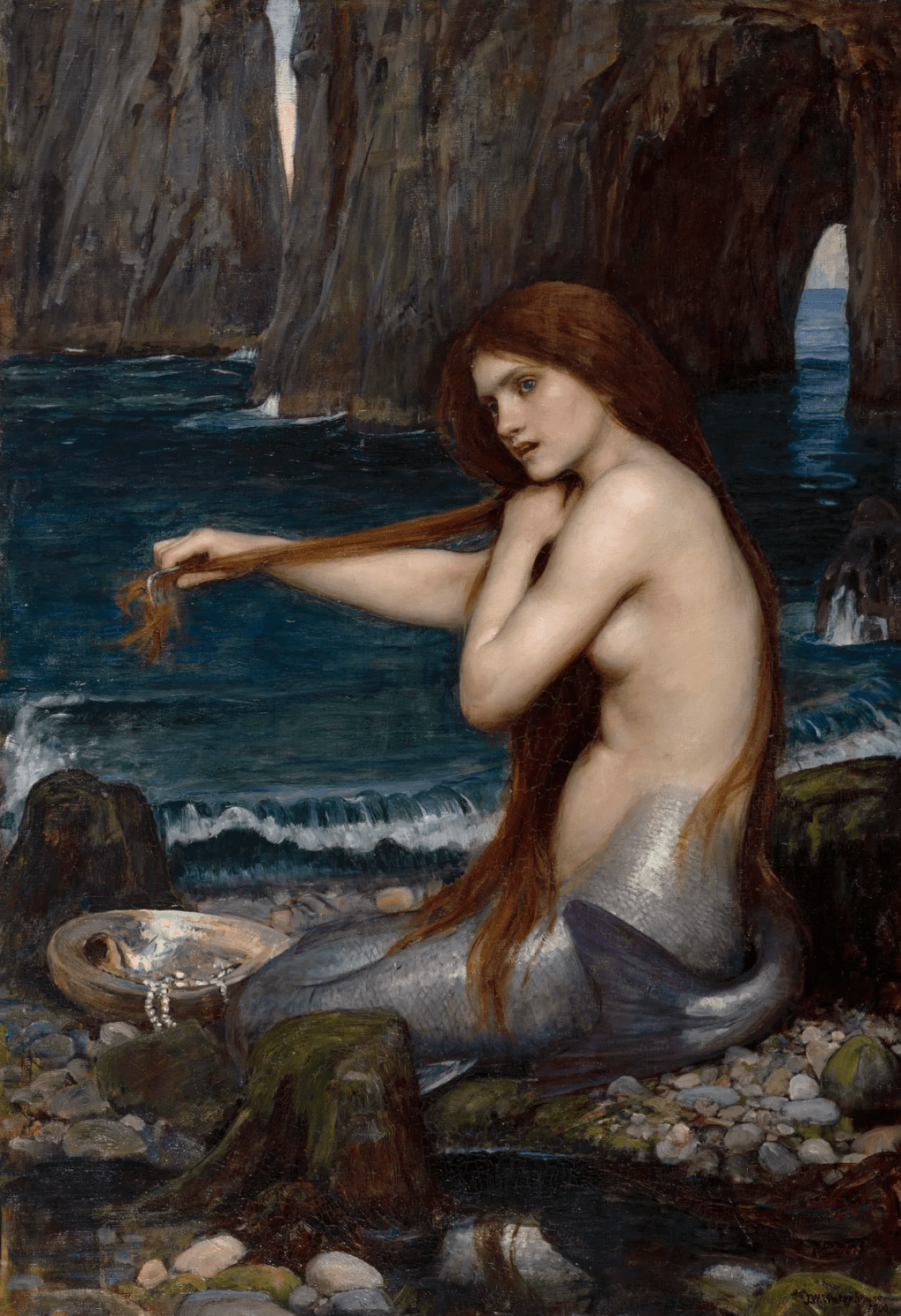
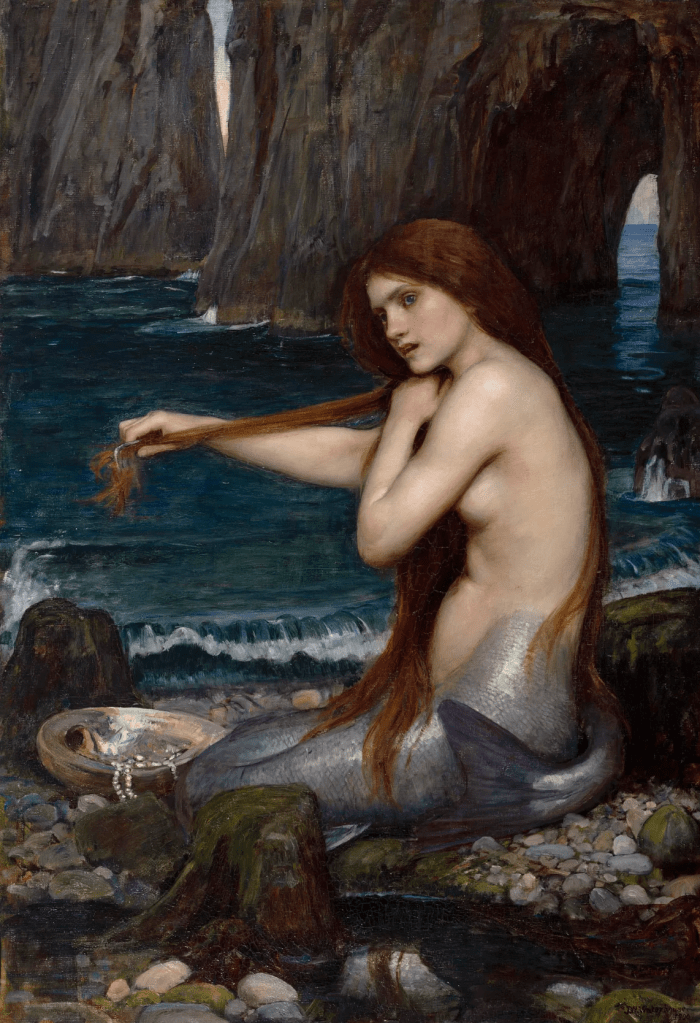
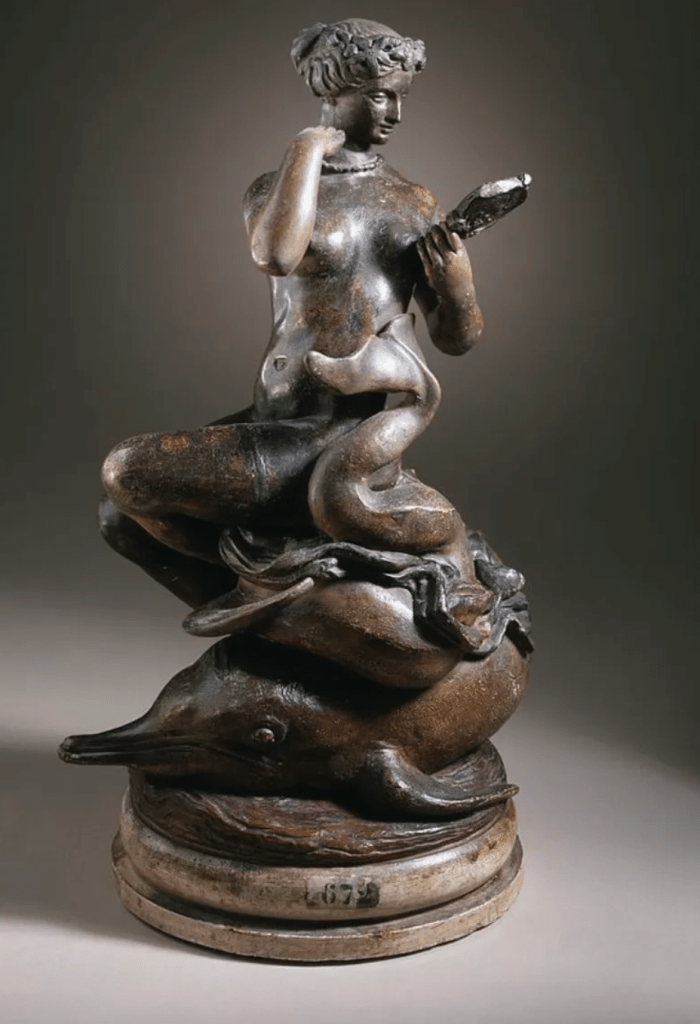
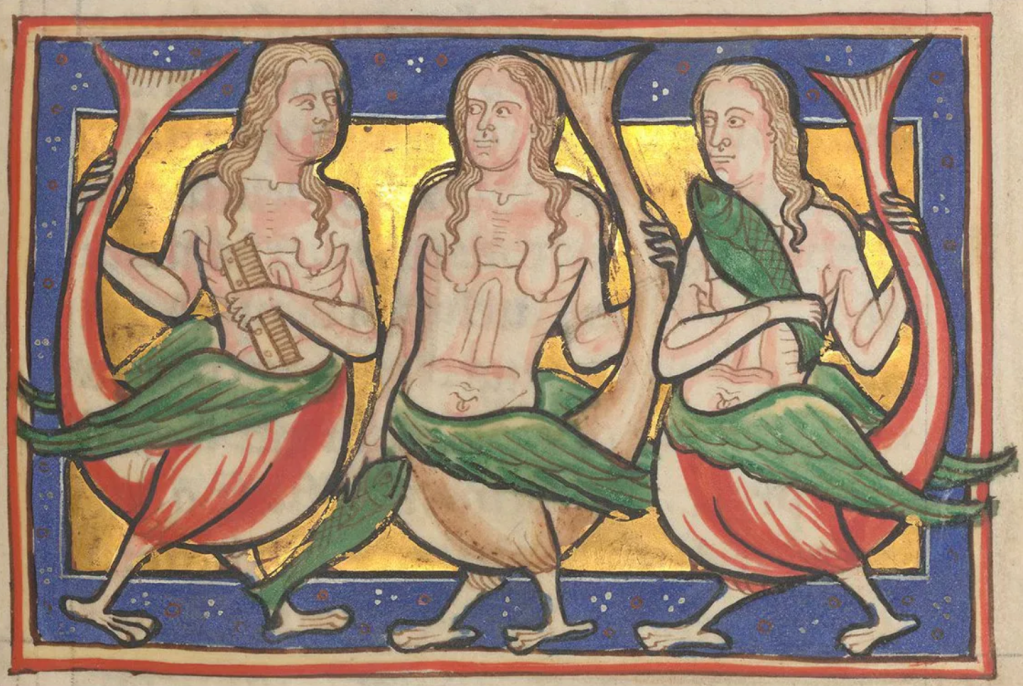
These sea-nymphs sometimes rode on dolphins, sometimes danced like waves, and sometimes appeared with the tails of fish. They’re the ancient sources of our mermaid myths, and it was they who guided lost sailors across the lonely seas.
To this day, some Greek families claim descent from mermaids. And in a way, they’re not entirely wrong: we do come from the sea, and the dolphins are our kin.
The word dolphin itself hints at the kinship. It’s based on the Greek word delphus(δελφύς), which means womb. And evolutionary theory clarifies what the myth intuits.
So let’s dive into it and get the first thing out of the way: dolphins are unusual “fish.” First, they’re not fish. Second, they’re not cold-blooded. Third, they have a womb—which is strange, because a womb in a sense replicates the sea in which they already swim.
But why would these sea-dwellers need this simulation of the sea? We can answer only by looking to their distant ancestors, who, like us, descend from that dew-bright strand of life that first crawled from water to land.
You see, most fish lay and fertilize their eggs externally, in their watery environment—just as God or Nature intended. In fact, the whole soggy logic of the fish egg—and every egg—is this: a dry egg is a dead egg.
“By God, I understand Nature.” —Spinoza
As web-footed fish like Tiktaalik wriggled up onto the banks of ancient rivers—like pilgrims without a promise—they still laid their eggs in maternal mud. But when the shape-shifting daughters of the earth—mosses, ferns, and early trees—spread along the shores, the descendants of those early fish began to forage and find shelter on drier ground.
But dirt doesn’t keep eggs wet.
So nature did what nature does best: it improvised.
It took in a mighty breath and whispered its own little fiat lux. And behold: by the sixth dawn, the whole watery world had been gathered into a tiny shell.
Now the little ones could be kept safe and soggy.
In fact, the invention of the egg proved such a successful innovation that, even today, sea turtles crawl onto sandy beaches to bury their eggs and leave the hatchlings to learn the ancient discipline of self-reliance.
Cold-blooded crocodiles, by contrast, keep vigil. They lay their eggs in nests and remain nearby as implacable guardians, daring the hungry world to take a single step closer.
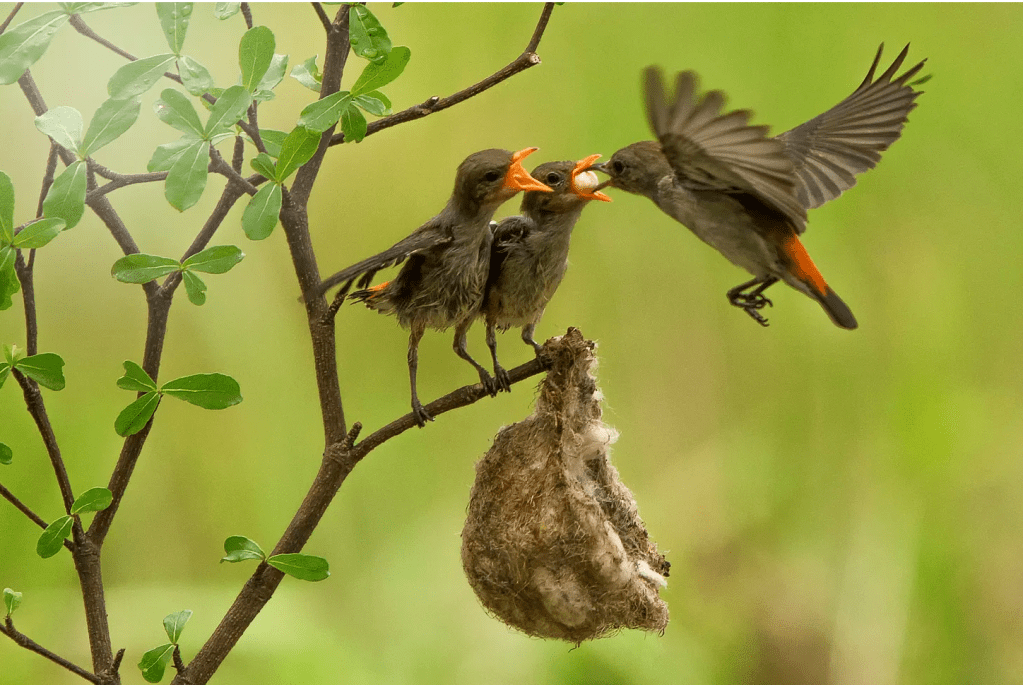
As for the dinosaurs—who can say how tender they were? But of their descendants, the birds, we can assuredly say, they tend their young with a devotion that’s outlived empires.
We no longer leave our eggs in nests. We carry them within us, in a warm, watery womb, safe from predators and from the Great Dry. Over deep time, the old hard shell vanished, its protective work taken up from within—woven into the soft, life-giving tissues of the placenta.
Even so, until about the sixth week of pregnancy, the fetus depends on a little vestigial yolk sac—a golden remnant of the ancient egg—until the placenta becomes fully functional.
Now the mother may wander as she pleases, gathering what she needs, while her little womb-fish feeds steadily through an umbilical cord rooted in the soft, sustaining wall of her uterus.
And in those earliest stages of pregnancy, floating in its tiny organic aquarium, a human embryo even forms the suggestion of gill slits. In time, these arches are repurposed—becoming the lower jaw, the inner ear, and the voice box through which we tell our stories.
And from those borrowed aquatic structures, some even learn to sing—Siren-like—and lure lonely sailors toward rocky shores.
In truth, we share the deepest layers of our genetic sequence with fish. We are descended from them. And when a human child is born, ancient ocean water breaks like a small wave on a Devonian shore.
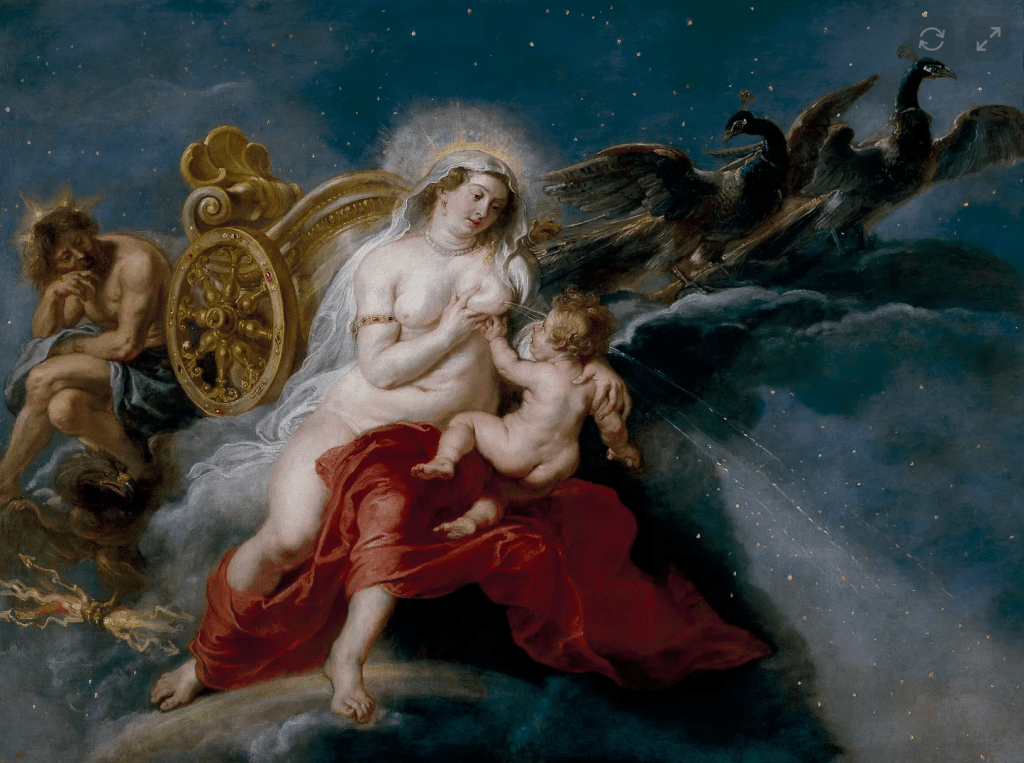
The newborn cries and gasps—dolphin-like—for thin air. Her umbilical cord is cut, and, at her mother’s breast, she turns instinctively toward milk. Dolphins, too, nurse their calves. After all, the mammary gland is but a modified sweat gland, and sweat glands are as useless to the dolphin as its dried-up tear ducts.
The dolphin shares in our journey from those muddy banks. She, too, is descended from web-footed fish. Long before she learned to swim the open seas, her four-legged ancestors walked the land—until their wandering feet returned to the water, and evolution shaped them once more for the waves.
Over the ages, those limbs became flukes and flippers, as her nostrils made their slow pilgrimage to the top of her head. Having no gills, she retained her lungs, lower jaw, inner ear, and voice. When she becomes a mother, she sings her calf’s name, teaching it her signature whistle.
And if we were to trace our own family tree far enough back, we’d discover that we, too, once shared a womb with this “womb-fish”—the delphus—and drank warm milk from the same ancient mammalian breast.
🌈 If you missed Field Note 3¾ — The Rainbow Connection: Don’t Believe Everything You Think, click here.
🟰 Want to read “An Ontology of Equality”? Click here.
🍭 If you missed Field Note 3.2, “All The King’s Candy,” Click here.
🦋 If you missed “The Birth of Pleasure,” Click here.
🎧 Prefer to listen to this piece? Click here.
 No Shortcuts to Now
Leave a comment