
On humility, deep time, and the illusion of the center
“spring is like a perhaps
Hand in a window
(carefully to
and fro moving New and
Old things,while
people stare carefully
moving a perhaps
fraction of flower here placing
an inch of air there)and
without breaking anything.”
— e.e. cummings
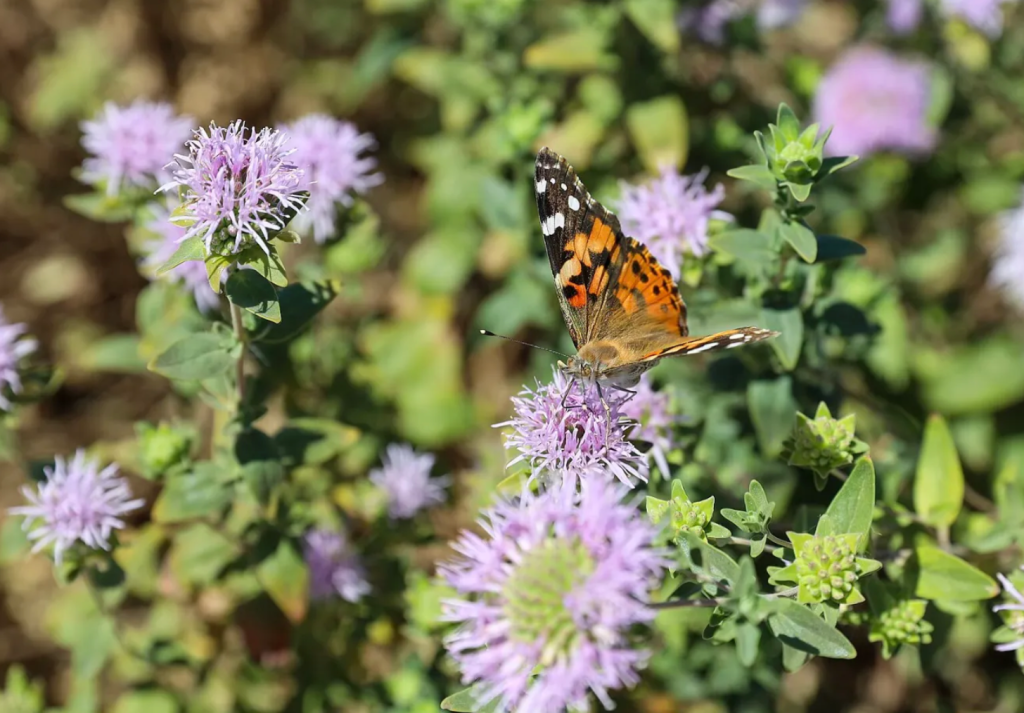
In spring, in the valleys below Lassen’s snowy slopes, butterflies—Painted Ladies and California Tortoiseshells—wake from their winter sleep, pump fresh life into their wings, then flutter and float about to court, mate, and oviposit on California lilac, which blossoms each year a most beautiful violet-blue.
By the time the heat of July and August rolls around, rising summer breezes lift a new generation up Lassen’s melting slopes, where they sip the nectar of the little flowers that freckle the blasted heath—wild lilac, coyote mint, snowbrush, thistles, asters, buckwheat, and yarrow.
On this particular fall day, as my family paused to rest and my daughter washed her chocolate-chip cookies down with cold spring water, I couldn’t help noticing how—almost as if reflected from the clear, still sapphire of Lake Helen now over fifteen hundred feet below—she seemed to mirror the purple mountain heathers that bloom in abundance across Lassen’s wild landscape.
She, too, remains untamed.
Up here, generation after generation, in the shifting shadow of the volcano, the purple heather sips from mountain lakes, ice-cold streams, and melting snows, delivered by Pacific clouds flowing in on swirling atmospheric rivers.
The flower blooms a soft purple-pink and displays her bell-shaped corolla—a little Latin crown. Her five fused petals rise into a bell that encases a yellow ovary and ten stamens.
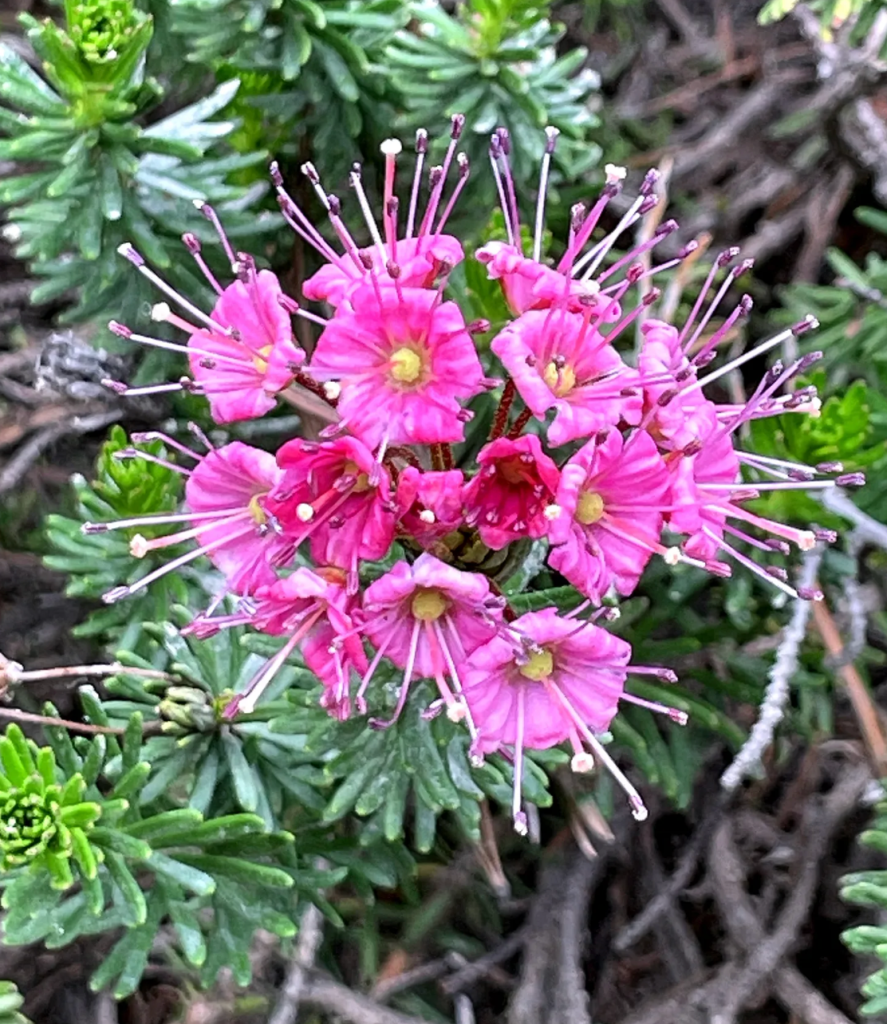
Each stem is densely covered with leathery, needle-like leaves, and can support from one to thirty flowers. They rise from an old woody clump that spreads across the mountain soil, creating shade and preventing evaporation.
Look closely, and the illusion breaks: though each flower wears a little crown, none presides. Not one rises from a single rootball. Not one is privileged. Instead, underground, woody runners spread outward—horizontal, branching, opportunistic—rooting as they go, forming a decentralized network in which no one point can claim to be the center.
Meditating on this rhizomatic logic, we see that what rises above the surface is only the thinnest fraction of the story.
It’s but a hinting glimpse of life—its diaphanous outward expression.
“The world is deep, deeper than day can comprehend.”—Nietzsche
On reflection, these evergreen shrubs begin to seem immortal.
In summer, butterflies, bees, and romantics drink nectar. In winter comes Death, and Earth drinks heaven’s tears.
Similarly, year after year, generation after generation, age after age, rhizomes reach through the underworld—creeping, weaving, connecting—while above, we mistake the momentary bloom for the whole of the being.
Beneath our feet, they keep company with Persephone, Demeter’s daughter, and with her plutocratic abductor, Pluto—keeper of minerals, metals, and the rarest earths. In this unconscious dark, hidden networks make their unexpected connections.
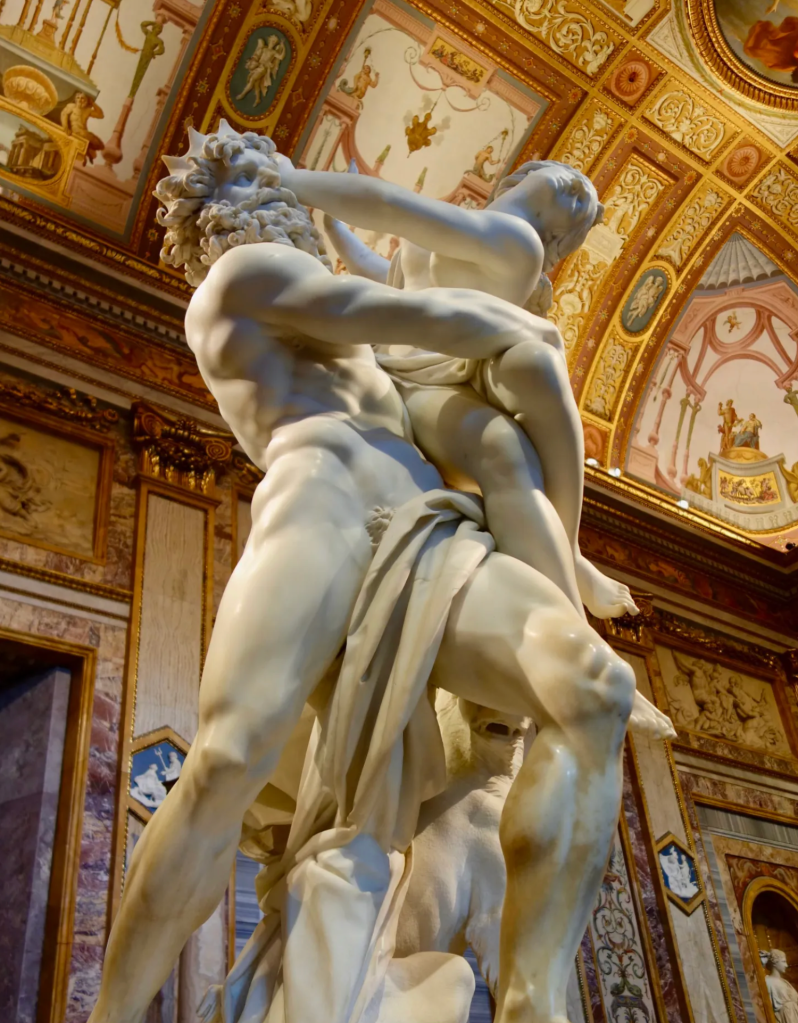
From this tangled depth rise our dreams, our mythologies, our art, our books, our religions. We do not know the forming thought before we think it; yet it blossoms all the same.
No shoot, no point—neither person nor paragraph—stands at the center. Nature has never fancied it needed a center. Only people do.
The purple mountain heather is a symbolic affront to the arrogance, the tyranny, the demagoguery that fancies itself the axis of the world. Had great Ozymandias been a botanist—had he studied the rhizome and grasped its implications—he would have been moved to feeble tears.
Or else he’d have ordered every last one ripped from the soil.
“My name is Ozymandias, King of Kings;
Look on my Works, ye Mighty, and despair!”
— Shelley, “Ozymandias” (1818)
In truth, the rhizome symbolizes life, culture, and even consciousness better than the Yggdrasil Tree, with its implied hierarchy and its keen eagle perched atop.
Consider this: trees appeared on the scene nearly 390 million years1 before that mighty “king of kings” ever perched—falcon-like—upon the throne of the Egyptian Empire. And mighty though he was, nothing remains of his works now but a colossal wreck: a ruin to rival the razed East Wing of the White House—the People’s House.
No; of his works, nothing endures, or will endure—not even the grand ballroom he imagined would transcend this mortal coil. At best, all we’ll find is a monument half-buried in the rolling desert sands of Time. Indeed, far older than pharaohs, kings, presidents, plutocrats, and self-important tech-CEOs, immortal rhizomes predate the deep-rooted trees by as many as twenty million years. It’s their quiet work that holds the vertical world up; it’s their labor we find written most deeply into the firm dais of our DNA.
And though we primates—with our opposable thumbs, stubby tailbones, and lingering arboreal habits—remain suspiciously tree-minded, it is the rhizome that lies closer to the root of what we are.
You see, rhizomes did much in the Devonian period—that great age of proud fish—to stabilize the muddy banks of ancient rivers. They made deep soils possible. As they spread, year after year, century after century, millennium after millennium, rich sediments layered over them.
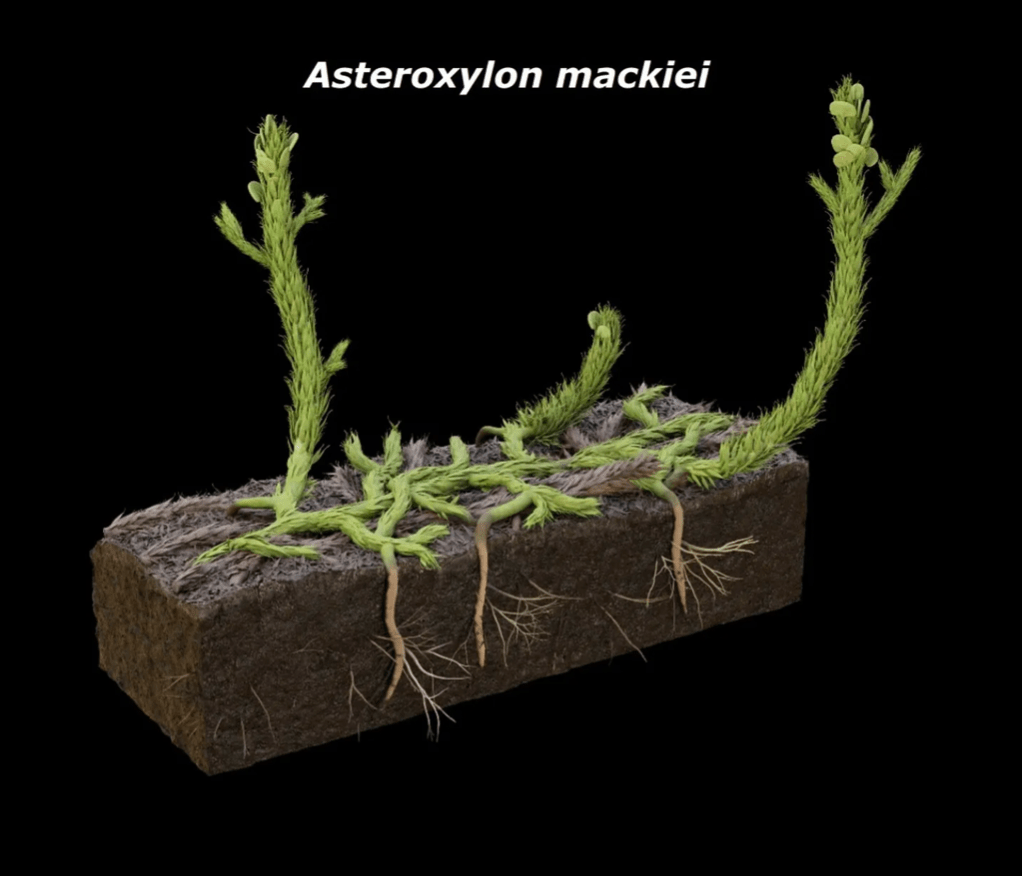
They grew upward and outward, layer after layer, webbing and fortifying the living underworld.2 This networked foundation supported the rise of more diverse terrestrial plant life and made it possible for deeper, stronger, and eventually arboreal roots to grow—roots capable of holding up the first tall trees.
Now trees could reach toward the sun and offer shade and shelter to other shape-shifting life. And this, in turn, made possible the world to come: the web-footed fish who felt their way onto muddy banks, the first amphibian ancestors who wriggled inland, carrying water in their blood.
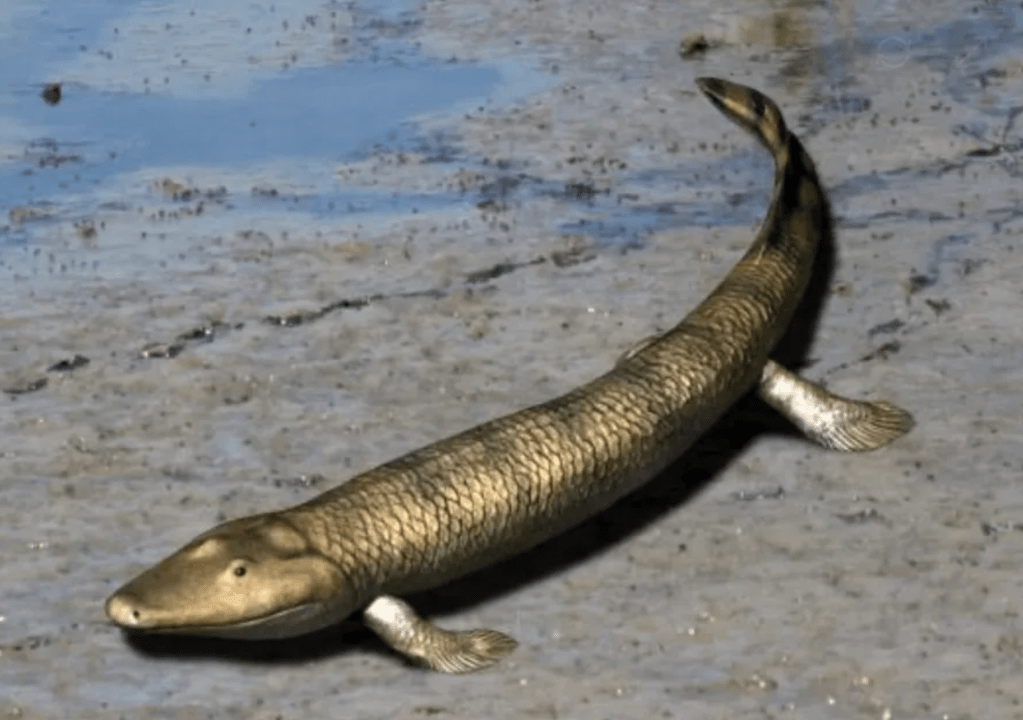
In time, some of these wandering lung-fish learned to speak symbolically. Some, to make sense of the muck and the mess, fashioned fishy tales about trees, knowledge, serpents, and Sin, and imagined themselves to be the crowing achievement of Creation.
But fossilized rhizomes remind us of our humble origins, and hint that we should not swallow the lurid bait of egotism. They remind us to reject fishy schools of thought that demand exclusion, privilege, and center. For neither the universe nor time has a center, except it be eternally and omnipresently Here and Now.
As Carl Jung wrote: “What we see is the blossom, which passes. The rhizome remains.”
🌈 If you missed Field Note 3¾ — The Rainbow Connection: Don’t Believe Everything You Think, click here.
🍭 If you missed Field Note 3.2, “All The King’s Candy,” click here.
🦋 If you missed “The Birth of Pleasure,” click here.
🎧 Prefer to listen to this piece? Click here.
 No Shortcuts to Now
Leave a comment